Forgot To Mention Moby: From PLUR to the Darkness of Cruelty, Suffering, and Torture
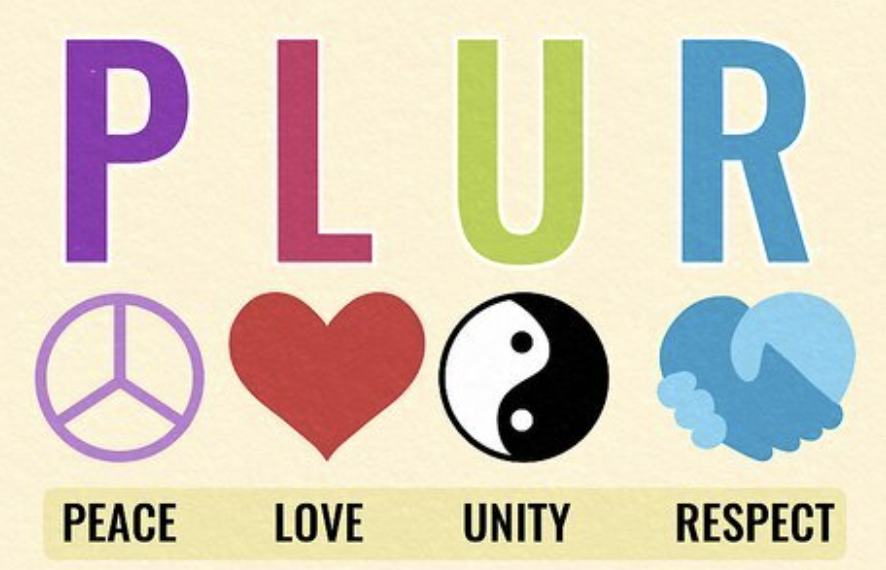
I forgot to mention regarding Coachella: I also watched Moby’s set! Besides being an older Gen X/younger Baby Boomer rave kid with some very cool experimental “old school” EDM, I didn’t know much about him beyond his hit singles. Impressed though by his set. Reading about him afterward, I learned he’s quite well known as an animal rights advocate. Philosophically, I have total respect for that. In fact, “Peace, Love, Unity, and Respect” or PLUR as colloquially understood in rave culture! His views got me contemplating, as they sometimes do, the broader question of suffering among living beings, both humans and animals alike.
I do think, though, that anything good on its face can be taken to an extreme. I worry when perfect becomes the enemy of much better. We need social change warriors and moderates alike, and I likely fall somewhere between the two camps as a so-called “pragmatic progressive.” In other words: Stoicism? I want to make the world better than it is, but with the wisdom not to waste resources trying to make it what it can’t be, only to end up nowhere, or worse off. Case in point, the Dignity Act post I made last week about imperfect immigration improvements gone unrealized.
There is no easy or simple answer to the inevitable extreme suffering of living beings. It’s one of the hardest things to contemplate. This is among my darker blog posts, but important to speak out loud nonetheless. Heads up: if you happen to be under the influence of any psychedelics, come back when you’re sober!
What a tragic fact of the universe - that when Earth was established, by God, nature, or whatever higher power, killing animals for survival was built into the very conditions of survival for other living beings. Humanity didn’t cause this dystopian reality, but we’ve certainly worsened it at an extreme scale.
If you are a believer, God is either all powerful or all good, but the observable world suggests both can’t possibly be true — as Neil deGrasse Tyson has put it, given all the ways the universe seems intent on killing us. (An online search shows this argument itself goes way back to Epicurus, but Tyson has done as much as anyone to bring it into the mainstream conversation.)
The suffering produced by industrial-scale meat production is horrendous, including for human workers. I’d argue slaughterhouse work is the worst job in the world. And yet I also recognize it’s unrealistic to expect meat consumption to disappear. Dogs and cats need meat for adequate nutrition, for starters.
Given the above, I have really uneasy feelings about the proposed hunting ban in Oregon going on the ballot. At a No Kings rally I was asked to sign it, and at first I didn’t, but changed my mind when a second person came by. It’s a worth thoughtful conversation for sure, but on its face, I’d still vote no. Are we trying to create a culture war issue? Although hunting and fishing is not my thing at all, do people really not see the difference between slaughterhouse factory farming, and someone who quickly kills an elk that dies instantly and has meat in the freezer for 6 months, and sustainably so? Why are we focused on individual hunters who are disproportionately Republican, instead of big corporate agriculture?
Then there’s also the issue of animal testing. I think it should be discouraged whenever alternatives are feasible, but I’m not yet convinced outright bans are appropriate, especially where animal testing is needed for human medicine development. That said, the most humane methods available must be mandatory and strictly enforced, particularly for any debatable activity involving animals.
“Certified humane” must become the international standard, not an option. The USDA does technically enforce some humane handling requirements, and while far too inadequate, it’s at least a framework. Recent violations are made publicly available here: www.fsis.usda.gov/inspectio… It’s difficult to even read any of it. But that’s exactly why we need to look. Worse yet, this last February 2026, the Trump admin has tried to eliminate speed limits to slaughterhouse kill floors: humaneaction.org/press-rel…
I also know I am far too much of a foodie to be a fundamentalist vegan, but I do opt for a healthy, plant-dominant diet, especially at home. We’re biologically hardwired to like meat, though I still feel a bit guilty when I eat it, even when it’s supposedly more humanely raised. I’ll also acknowledge that there are multiple credible schools of thought on plant-based versus omnivorous nutrition—an area where I’m far from a full expert. Importantly, I don’t believe in fundamentalism, and I strive for the Buddhist-oriented middle path. That said, too many people out there demonstrate blatant indifference to the suffering of other people, as seen every day in our political system, let alone other living beings. I hope that changes.
The most extreme forms of cruelty must be banned across the board. We desperately need improvement for the collective bettering of the world, despite there being understandable justifications for meat consumption and animal testing—unlike, say, the Holocaust, or torture carried out simply to make others suffer. Those have no justification whatsoever. Organizations like Freedom From Torture document in sobering detail how many countries still practice it today, in defiance of international law: www.freedomfromtorture.org/news-and-… The fact that ongoing torture happens to the most vulnerable among us is a total disgrace.
I get that suffering, to very widely varying degrees, is part of any living being’s life. Some of us get to live with far less of it than others. I find solace in believing in karma and the possibility of its manifestation before, during, and after my life—rather than in blind, random luck (or lack thereof) of the universe. I hope most of humanity can better agree on eliminating the most extreme forms of suffering towards all first: cruelty, torture, human rights abuses.
Kudos to the organizations and people out there actively doing good and moving the needle—for animals and for humans alike.