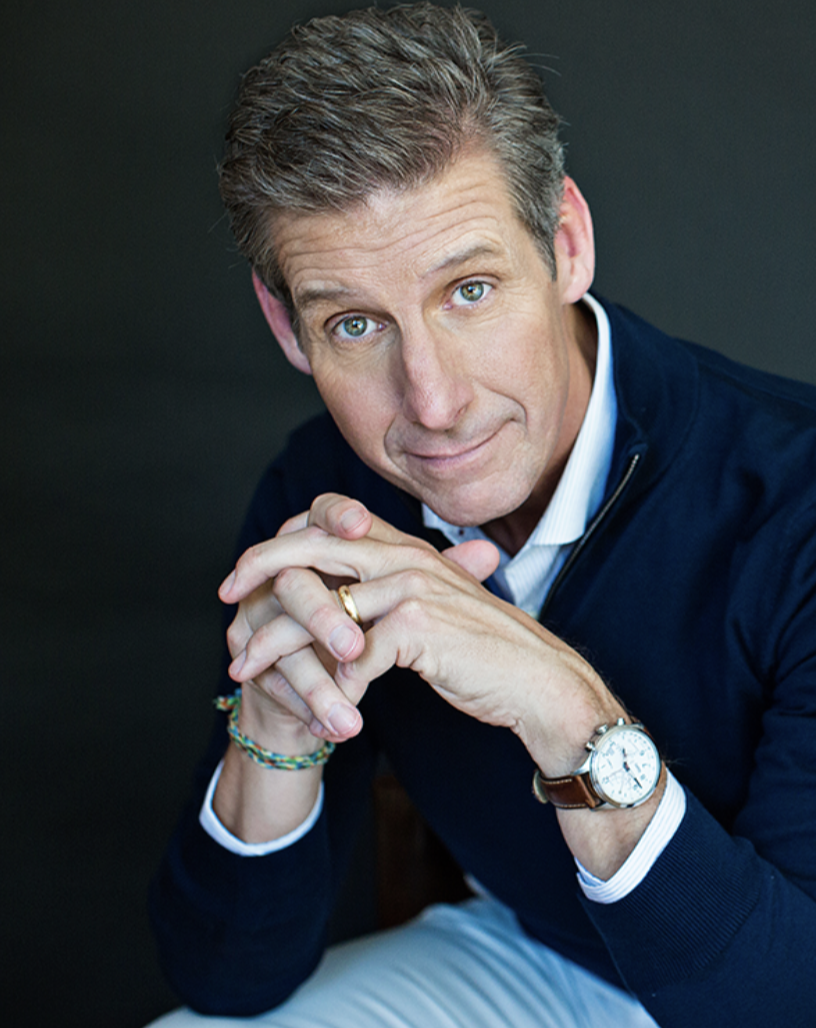
Kai Ryssdal on the Prof G Podcast
Kai Ryssdal is among one of my favorite journalists. Likely my number 1 favorite of all time. He has an excellent radio voice, radiant charisma, and isn’t nearly as serious as Ezra Klein. Even the recent Marketplace episode (2/24/26) with the outgoing President of the Atlanta Federal Reserve Bank, Raphael Bostic, included some dry humor and charm.
I’m a little late on the subject, but it was great to hear Ryssdal chat with Scott Galloway again recently on the Prof G pod, especially in reverse roles, being interviewed rather than the interviewer, posted on 2/19/26: www.youtube.com/watch
I was a bit surprised to hear Ryssdal mention (I’m paraphrasing here, but not by much) the idea that public media shouldn’t be dependent on federal funding indefinitely, but rather just to kickstart operations. Ryssdal having said that absolutely FLOORED me! But on second thought, his explanation sounded reasonable nonetheless, and had me reconsidering my position on federal funding of public media being essential. I’m not sure that I agree with Ryssdal, in that I still support ongoing federal funding of public media, and think it’s vital to have a public source of news info ostensibly not fully corrupted by corporate money or special interests. There is a reason why NPR, OPB, and Marketplace are less “clickbaity” than CNN or Fox News, or worse of all, hate-mongered disinformation platforms like InfoWars, or 4chan/8chan. That said, even public media has its “underwriters” so it’s not perfect, but certainly not comparable.
Personally, I like Ryssdal much much more than Galloway. While Galloway brings up many good points, my opinion on Galloway is extremely mixed for many reasons. I appreciated his viral TED talk, and his book “The Algebra of Wealth.” However, last year on the Raging Moderates podcast, Galloway and his co-host Jessica Tarlov pontificated some profoundly misguided immigration perspectives (which I will talk about why in-depth sometime later). Admittedly, it really rubbed me the wrong way, as someone who objectively is much more of an immigration subject matter expert than either of them. For another, I think Galloway’s content is excellent regarding the challenges young men face, especially if you read or watch him in depth, which is great. Yet, his social media approach seems to prioritize soundbites designed to get attention, controversy (and consequently ad revenue), rather than to inform well. How ironic given that his published books seem great. Yet, unfortunately in today’s algorithmic social media economy, there is usually a trade-off between being “attention-grabbing” and being “informative.” I think someone with Galloways’ magnitude of wealth and influence should prioritize the latter of said tradeoff rather than the former.
Galloway also sounded like such a negative baby boomer, totally missing the point, when he mentioned to Ryssdal that youth unemployment is around 10%, which is supposedly “typical.” He suggested that youth sentiment might be exaggerated. Are you fucking kidding me? That’d be like telling a school teacher that a class size of 40 students is historically normal, and imply that teacher burnout is just over-exaggerated by social media. Even if you’re not a school teacher yourself in the trenches, assertions like that would be poorly-received. Why would it be any different for young people?
And sure, I’m all for critical thinking, and food for thought. It’s always good to know what the “other side” is saying and step outside of your own echo chamber.
But at the same time, let’s not slip into the tendency of giving misleading data disproportionate “voice” or influence, just to sound “moderate.” Such a statement might sound thoughtful, but sounding thoughtful and being thoughtful aren’t the same thing.
Ryssdal’s reply to Galloway was excellent, challenging him: “well can you blame them [young people]?” To Galloway’s credit, he said no and backed down. Ryssdal then went on to address the substance of the question, in intelligent, nuance-filled depth.
Personally, I don’t care how “typical” 10% for youth unemployment might be, it’s still totally unacceptable, no matter the justification. And it’s all the more unacceptable when so many other unfavorable generational economic factors are stacked on top.
Consider the following: if you used a credible unemployment rate figure for ANY minority or underrepresented group, we’d be deep in a recession right now. If we had 10% “headline” unemployment, we wouldn’t accept that, because that would be akin to late 2000’s Great Recession numbers. It’s why headline economic data (namely unemployment and inflation numbers the Federal Reserve evaluates) must be taken with a gigantic, brick-sized hunk of salt. It’s why we must fund the Bureau of Labor Statistics to give us credible, accurate, and niche government data that is accessible to all of us, for free, as a public good.
Anyways, if you’re not a daily or even regular Marketplace listener, I’d strongly recommend it. Kai Ryssdal has a way of making what could be a dry business program into engaging material. I’ve learned so much from there. It almost all non-partisan, non-clickbaity content. Check it out!